
PANAMA FINCA HARTMANN TYPICA

Price :
605.000đ

Panama connects North and South America, with around 80% of its land covered by mountains and tropical forest. Fertile volcanic soil and wide day-night temperature swings create ideal conditions for coffee. Chiriquí, the western province bordering Costa Rica, is home to renowned coffee regions such as Boquete, Volcán and Renacimiento.

Finca Hartmann (Santa Clara, Renacimiento) was founded in 1940 by the Hartmann family, who have been growing coffee for three generations. Guided by the principle "Growing coffee in harmony with the environment," their coffee trees mature slowly under the shade of native forest. The farm has placed highly at Best of Panama for many years.

Typica is one of the oldest coffee varieties and the genetic origin of many Arabica varieties grown today. From Ethiopia, Typica traveled through Yemen, India and Java before spreading to Europe and the Americas. It is low-yielding and prone to disease, but delivers exceptional quality, with floral notes and a delicate, clean cup.
HÌNH 4.png
TASTING NOTE ORANGE BLOSSOM, BERGAMOT, APRICOT, AND TEA-LIKE NOTES. VERY SWEET AND ROUNDED MOUTHFEEL, WITH A COMPLEX, LINGERING FLORAL AFTERTASTE.
REGION PANAMA
FARM FINCA HARTMANN
PRODUCER HARTMANN FAMILY
ALTITUDE 1,650 - 2,000 MASL
VARIETY TYPICA

Panama connects North and South America, with around 80% of its land covered by mountains and tropical forest. Fertile volcanic soil and wide day-night temperature swings create ideal conditions for coffee. Chiriquí, the western province bordering Costa Rica, is home to renowned coffee regions such as Boquete, Volcán and Renacimiento.

Finca Hartmann (Santa Clara, Renacimiento) was founded in 1940 by the Hartmann family, who have been growing coffee for three generations. Guided by the principle "Growing coffee in harmony with the environment," their coffee trees mature slowly under the shade of native forest. The farm has placed highly at Best of Panama for many years.

Typica is one of the oldest coffee varieties and the genetic origin of many Arabica varieties grown today. From Ethiopia, Typica traveled through Yemen, India and Java before spreading to Europe and the Americas. It is low-yielding and prone to disease, but delivers exceptional quality, with floral notes and a delicate, clean cup.

Republic of Panama: a country in Central America that serves as the link between North and South America. Panama borders Costa Rica to the west and Colombia to the east. The country covers around 75,000 km², roughly the size of Japan's Hokkaido island. Panama is famous for the Panama Canal, alongside key industries such as shipping, mining and agriculture, with coffee being one of its most important and renowned agricultural products.

Around 80% of Panama's land is mountainous, while the rest is covered by tropical forest. Panama has a tropical climate. Some areas have fertile volcanic soil and wide day-night temperature swings, creating ideal conditions for growing and producing coffee.

Finca Hartmann: located in Santa Clara, in the Renacimiento region. The Hartmann family, founders of the farm, have been growing coffee for three generations. The first generation, Alois, began growing coffee after World War I. In the second generation, Ratibor inherited the land from his father and founded Finca Hartmann in 1940. Farms owned by the Hartmann family have consistently placed highly at Best of Panama over the years.

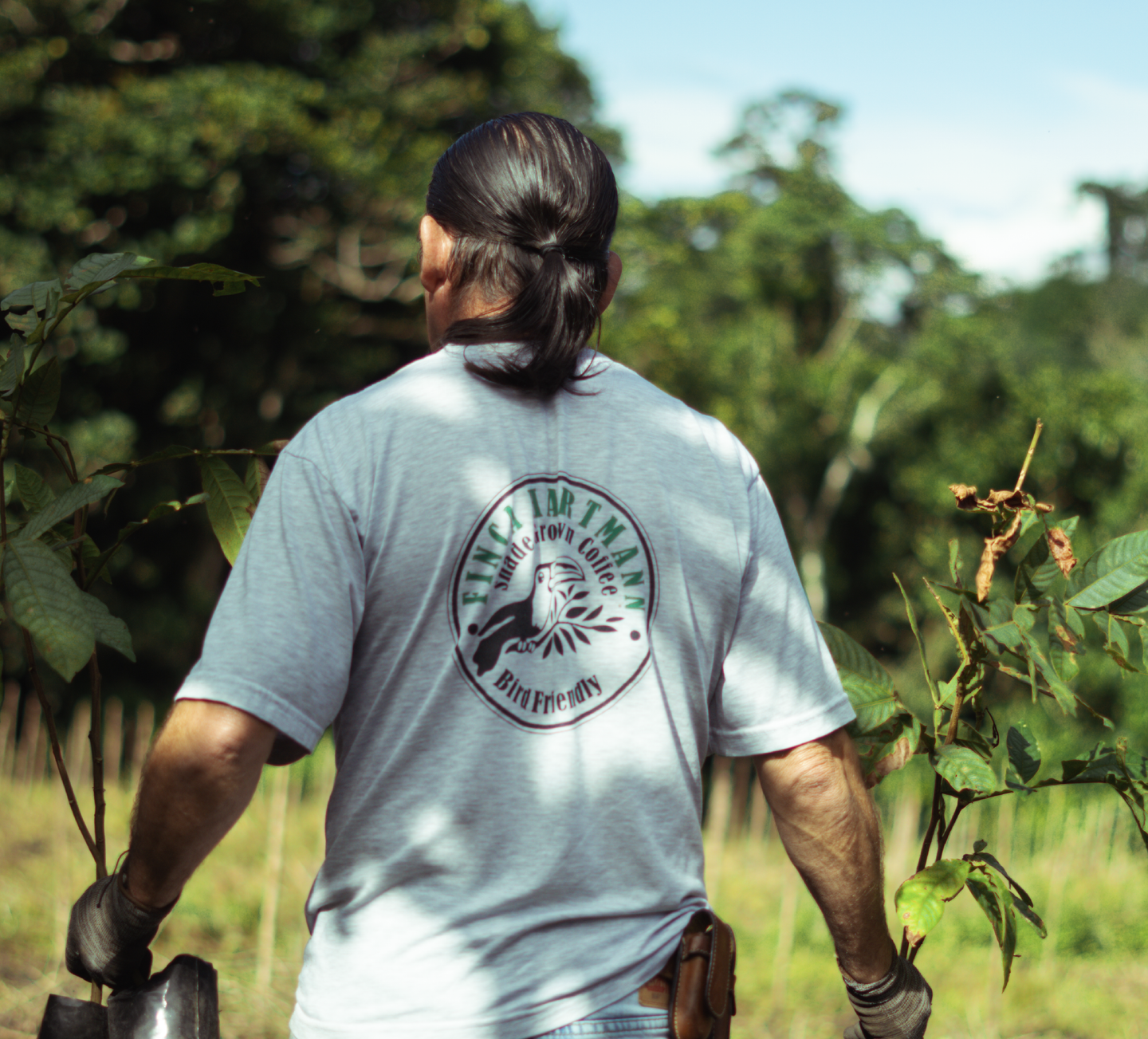
The Hartmann family's guiding principle is: "Growing coffee in harmony with the environment." Since the farm was founded, the family has always respected nature and the land, making harmony with the environment their top priority. Finca Hartmann is surrounded by vast tropical forests, where coffee trees mature slowly under the natural shade of native forest trees. The Finca Hartmann logo features a bird, a symbol of the connection between coffee, nature and the ecosystem the family has always championed.

Typica is one of the oldest and most influential varieties in the history of world coffee. It is not only a widespread variety but also the genetic origin of many Arabica varieties grown today. Typica is very low-yielding and susceptible to major coffee diseases, but delivers exceptional quality. Typica is known for its floral notes and a delicate, clean cup.

Like other Arabica groups, Typica is believed to have originated in southwestern Ethiopia, before being brought to Yemen around the 15th–16th century. From Yemen, coffee was taken to India, then from the Malabar region to Java (Indonesia) in the late 17th century. These trees became the origin of today's Typica.

In 1706, a Typica plant was brought from Java to Amsterdam and planted in the botanical garden. From the Netherlands, Typica was taken to Suriname, French Guiana and Brazil. Meanwhile, the plant was carried from France to Martinique, then spread to Jamaica, Santo Domingo, Cuba and Central American countries. By the end of the 18th century, Typica was widespread across the Caribbean, Mexico, Colombia and Central America. Until around the 1940s, most coffee plantations in Central and South America were still planted mainly with Typica, though it was gradually being replaced due to its disease susceptibility and low yield.